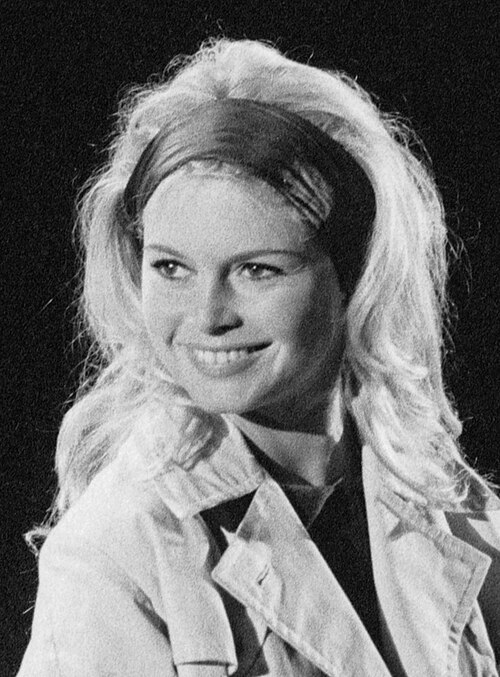
Brigitte Bardot is one of the most recognisable figures in twentieth-century cinema. From her international breakthrough in the 1950s to the continued attention surrounding her films and public image, Bardot’s influence has extended far beyond France and continues to attract interest from audiences, filmmakers, and commentators around the world.
This fascination is explored in Antoine de Baecque’s French biography ‘Bardot‘. Structured around fifteen key moments, the book offers an in-depth portrait of the actress and cultural icon. With English-language rights currently available, the translation of this work, which is discussed in this article, offers publishers the opportunity to introduce a new readership to a figure whose cinematic legacy stays relevant.
Brigitte Bardot as an international cultural icon
Although she retired from acting in 1973, her life and career continue to attract interest from filmmakers, academics, and audiences around the world. Her impact has been revisited through new cultural projects, including a British Council documentary exploring her struggles with fame, and the UK premiere of Bardot (2025) by l’Institut Français, which examines the different dimensions of the Bardot myth through screenings and discussions.
This ongoing interest has also extended to film scholarship, with academic work such as Ginette Vincendeau’s analysis of Bardot’s rise from her early years as a fashion model to her period of international stardom between 1956 and 1960, highlighting how her image evolved into one of the defining symbols of twentieth-century cinema.
Bardot’s international breakthrough as an actress
Brigitte Bardot appeared in about 47 films over the course of two decades, working with some of the most influential directors and actors of her time, including Francis Cosne, Jean Marrais and Michel Boisrond. Her filmography includes several works that remain closely associated with her image and legacy, such as And God Created Woman (1956), The Truth (1960), Contempt (1963), and Viva Maria! (1965), among many others. However, it was And God Created Woman (1956), directed by Roger Vadim, that transformed Bardot from a promising French actress into an international star. The film achieved remarkable success beyond France.
In the United Kingdom, the film became one of the ten most popular films of 1957, according to The Times (12 December 1957, Issue 54022). In the United States, it became the highest-grossing foreign-language film released at the time, earning approximately $12 million at the US box office, contributing to what became known as ‘Bardomania’, that is, a global media phenomenon in which Bardot became one of the most photographed, discussed, and imitated figures of her era. These achievements established Bardot not only as an actress, but as a cultural figure of her own.
A lasting international coverage
Decades after leaving the film industry, Brigitte Bardot remains a subject of international media attention, not only because of her cinematic legacy but also because of her involvement in animal rights activism and the controversies surrounding some of her racist public statements. English-language publications have continued to revisit her public image; before her death, she appeared in interviews such as her 2023 conversation with The Guardian, in which she reflected on her enduring fame and expressed her frustration at the continued public fascination with her.
This type of public scrutiny, unwanted or not, is not unique to Bardot, but reflects the broader fascination surrounding celebrities whose lives continue to attract audiences, feeding the commercially active markets of biographies, memoirs, and documentaries.
The market: biographies of cultural icons remain commercially relevant
In the United States, alongside major fiction categories such as romance and fantasy, adult nonfiction remains one of the largest sectors of the publishing industry, with publishers reporting approximately $2.88 billion in sales in 2024. Within this broad category, books centred on the lives of public figures continue to attract significant attention from readers. The commercial success of major celebrity memoirs, including works such as Britney Spears’ The Woman in Me and Prince Harry’s Spare and the continued publication of biographies, memoirs, and illustrated books dedicated to actresses such as Marilyn Monroe, Audrey Hepburn, Sophia Loren, Jane Birkin, and Catherine Deneuve, highlights the longevity of this appeal.
Why this book: a visual and accessible approach to Brigitte Bardot
Rather than offering a traditional chronological biography, this book presents Brigitte Bardot’s life through fifteen key moments, each accompanied by a defining photograph that captures a specific point in her public image. This structure creates an accessible entry point for readers who may be discovering Bardot for the first time in such detail.
From her rise as an international film star to her later public life beyond cinema, the book examines Bardot, while taking a step back from the image itself; rather than attempting to define her through a single perspective, this book presents her as a subject of reflection: an individual whose career, public image, choices, controversies, and legacy reveals sometimes more of moral changes of her time than her individual choices.
Approximately 180 pages in length, the book combines an accessible format with a rich foundation of factual information about, beyond Bardot herself, the evolution of post-war French filmmaking, and the cultural transformations that shaped cinema during the second half of the twentieth century.
Current Translation Status
The complete English translation has not yet been commissioned. A 30-page sample translation, currently being revised, has been prepared for pitching and will be available for evaluation by interested publishers. A revised one-page extract from the sample translation is provided below to offer a glimpse of the style and approach of the English version.
As an independent literary translator, I prepared the English sample translation for this project but do not own the rights to the manuscript. If you are an editor or publisher interested in acquiring the English-language translation rights to this title, please get in touch with the French Publishers’ Agency, an affiliate of the Bureau International de l’Édition Française (BIEF), which represents the rights of this work on behalf of the French publisher.
About me
My name is Zina, and I am a translator who has a particular interest in literary and editorial translation. I write (or at least try to write) in Arabic on this blog about literature and translation. You can find out more about my work on LinkedIn or on this blog. 🤗
Image Credits
Creative Commons Attribution-Share Alike 4.0 International License Image. All rights belong to Comet Photo AG (Zürich). Com_L10-0171-0017 / CC BY-SA 4.0. No changes were made; no licensor endorses me or my use.


اترك رد